NWC Events
Colloquia and Seminars at the National Weather Center

- This event has passed.
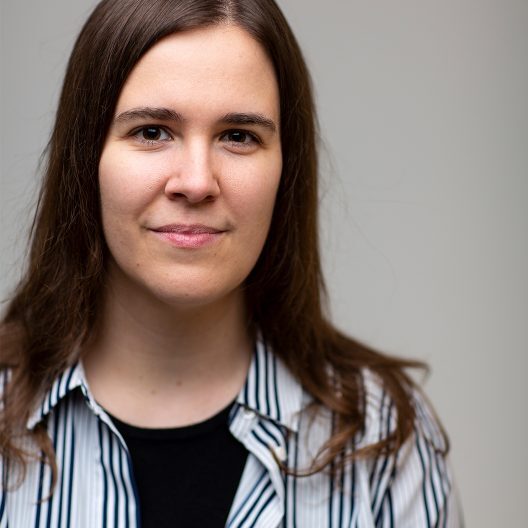
NWC Colloquium: Dr. Alexandra Anderson-Frey
October 24, 2023 @ 4:00 pm - 5:00 pm
We're Not (Only) in Kansas Anymore: Tornadoes Beyond Tornado Alley
Assistant Professor, University of Washington
The layperson's perception of tornadoes is that they are near-exclusive to the U.S. Great Plains and Midwest, where a favorable combination of near-storm environmental conditions is most often present in the spring and summer. In reality, of course, tornadoes occurover a wide variety of geographical locations, times of day, and seasons, with complications such as low population density leading to specific challenges in issuing watches and warnings as well as establishing climatologies for such rare events in the first place. After a brief introduction to the dynamics underlying the formation of tornadoes, this talk explores the use of machine learning-aided clustering to characterize the prototypical environments in which tornadoes form, then takes those results a step further by discussing how and why tornadoes can occur despite the apparent absence of key dynamic and kinematic "ingredients" in the environment.
Bio: Alexandra Anderson-Frey is an assistant professor in theDepartment of Atmospheric Sciences at the University ofWashington. She obtained her BSc Honours in Atmospheric Science from the University of Alberta in Edmonton, where she experienced temperatures below -50C and decided that was enough of that. After internships at Environment and Climate Change Canada and the NASA Goddard Space Flight Center, she obtained a MSc in Atmospheric Science from McGill University, with a thesis that explored a new use of the time dimension in kriging to reduce gaps in radar data. She finally moved to the U.S. for a PhD in Meteorology at Penn State, where she worked under Yvette Richardson to use self-organizing maps to establish prototypical near-storm environments. After a postdoc at CIWRO (back when it was CIMMS) with Harold Brooks, she joined the faculty at the University of Washington in the fall of 2019 and was awarded the Calvin Professorship in Atmospheric Sciences in 2022.